About Yohanashi
How this space came to be
Yohanashi began through years of conversations.
For the past ten years, I have worked in education in Japan, supporting people at many different stages of life. I have taught in conversation schools, supported children in after-school programmes, worked with private students, and eventually taught English in junior and senior high schools.
Across these different environments, I met people with completely different backgrounds, personalities, and life experiences.
Yet, through these conversations, I noticed something that appeared again and again.
People were often searching for a deeper understanding of themselves.
They were questioning who they were, what they wanted, how they should move forward, and how to navigate the expectations placed on them by family, society, and their own experiences.
Sometimes these struggles appeared as a lack of confidence. Sometimes as difficulty making decisions. Sometimes as a feeling of being disconnected from their own thoughts, feelings, or needs.
But often, underneath these experiences was a similar desire:
To understand themselves more clearly.
Working in education allowed me to witness these moments, but it also showed me the limitations of the environments we often work within.
As a teacher, there are many responsibilities, structures, and practical limits. Time is limited. Curriculums are set. There are goals to achieve and schedules to follow.
While these systems provide important support, they do not always leave much room for the slower, more personal conversations that help us explore who we are and what we need.
This stayed with me.
I began wondering:
What would it look like to create a space where people could intentionally choose to spend time understanding themselves?
A space where there was no pressure to perform, no expectation to have the perfect answer, and no need to explain everything before beginning.
A space where people could explore their experiences with curiosity, reflect on the stories they carry, and discover what feels true for them.
That question became the foundation of Yohanashi.

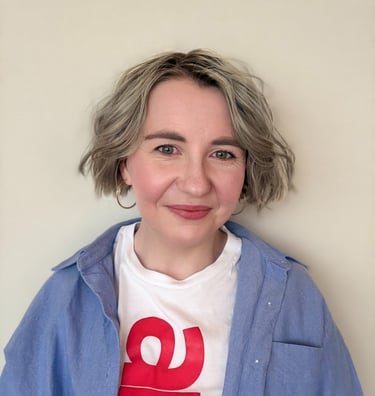
Meet the Founder
Diana Mote
Quiet by nature, curious by heart
I have always been drawn to the quieter layers of life. I notice how much the small, ordinary moments shape our inner world. Early morning walks, a good cup of coffee, singing karaoke with friends, or taking short trips to the countryside have taught me that depth is often found in the in-between spaces rather than in milestones or achievements. I am based in Arakawa, Tokyo, and find that the rhythms of this neighbourhood shape much of how I think about slowness and connection.
For ten years, I worked as an English teacher, supporting young people as they navigated identity, confidence, and belonging. I cared deeply about my students, yet over time I began to feel the limits of the role. Time was short. Expectations were fixed. There was rarely enough space to explore the questions that seemed most important. I could see students struggling with uncertainty, decision paralysis, and a quiet loss of direction, patterns I recognised from my own earlier experiences.
That recognition led me to look more closely at what happens beneath performance and achievement. I became increasingly interested in how our minds and bodies process information, how we carry stress, and how disconnection can slowly build when we move too quickly. I began exploring the practices that had helped me reconnect with myself, including creativity, movement, sleep, and nutrition. These steady pillars restored a sense of clarity and agency in my own life. They helped me rebuild trust in myself and my decisions.
This curiosity eventually led me to train in holistic counselling and reflective practices, where I learned to hold space with structure, care, and responsibility. Alongside this training, I also pursued studies in Reiki, sound healing, and yoga out of personal curiosity and a desire to better understand the mind body connection. While these practices are not positioned as clinical treatment, they inform the gentle, grounded ways I support reconnection and awareness within sessions and workshops.
My approach is steady and collaborative. I do not position myself as someone who provides answers. Instead, I bring attentive listening, thoughtful questioning, and reflective tools that support clarity and self-understanding. These may include guided meditation, journaling, visualization, simple movement practices, or other creative methods, depending on what feels appropriate in the moment.
I believe growth does not need to be dramatic to be meaningful. Often it begins with small shifts in awareness. My role is to support those shifts professionally and transparently, always with respect for your pace and autonomy.
If you are considering working together, I welcome you to begin with a conversation. It matters that you feel comfortable and that this approach aligns with what you need.